Is Mustard Cut and Come Again
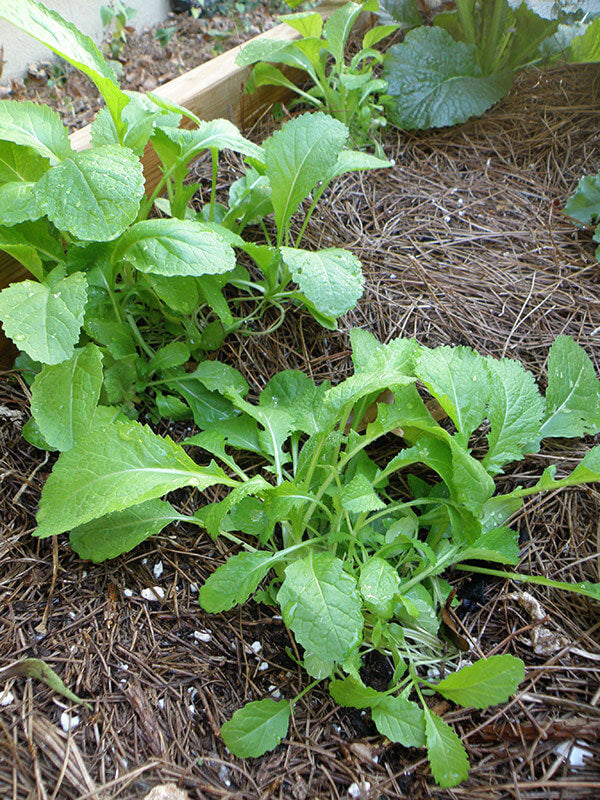
Mustard greens are fast growing, nutritious leafy greens. They're perfect for gardens and containers in both jump and fall. Although not quite equally cold hardy as their cousins, collards and kale, piquant mustard greens exercise tolerate a light frost, which makes their leaves sweeter. In areas where at that place are no killing freezes, gardeners enjoy growing mustard greens all wintertime long. The mustard patch is a pretty sight in the absurd season garden. The leafy plants are piece of cake to care for and skillful companions to autumn flowers such equally pansies. Mustard greens grow in a rosette of leaves upwardly to about a foot-and-a-half tall. You tin simmer the big peppery greens or choice smaller, young leaves to eat raw in salads and sandwiches.
Quick Guide to Growing Mustard Greens
- Plant mustard greens during the absurd temperatures of leap and fall. These tasty greens abound well in raised beds, containers, and in-footing gardens.
- Space plants 12 to 18 inches apart in an area that gets plenty of sunlight and has fertile, well-drained soil with a pH of 6.5 to 6.8.
- Ameliorate native soil by mixing in several inches of aged compost or other rich organic matter.
- Mustard greens can produce edible leaves rapidly with a steady supply of water. Bank check soil wet regularly and water when the top inch of soil becomes dry.
- Afterwards planting, encourage fantabulous leaf production by regularly feeding plants with a water-soluble constitute food.
- Harvest mustard greens when leaves are large enough to eat.
Soil, Planting, and Intendance
Mustard leaves grow fast and most tender in moist, rich soil. Sun is ideal, but because they make only leaves and not fruit, they are a footling more tolerant of shade than fruiting vegetables like tomatoes. Enrich the texture and nutrition of the planting area by mixing in iii inches of compost or Miracle-Gro® Performance Organics® All Purpose In-Basis Soil with the top six inches of existing soil. (A digging fork works well for this.) For pots, apply a premium quality potting mix like Miracle-Gro® Performance Organics® All Purpose Container Mix to help yous get a big harvest. It always seems early when it'south time to plant mustard, but it pays to program ahead. For fall harvests, fix plants in the garden iv to 6 weeks before the kickoff expected frost. In spring, you can start nearly iv weeks ahead of the last frost engagement and continue planting a little later.
If you're looking for an impressive harvest down the road, skip the seeds and plant strong, vigorous Bonnie Plants® mustard greens instead. Our plants come thickly seeded in their pots. You may set them out as they are, but they will grow faster and requite yous more if you take a fiddling time to divide the seedlings. Gently tease the seedlings apart into 3 to vi clumps. Exist conscientious not to tear up the roots. If they don't tease autonomously gently, you can cutting the dodder in one-half with a knife and in half again. Space clumps 12 inches apart for traditional mustard greens, 12 to 18 inches apart for Japanese Giant Cherry-red Mustard (a slightly larger found).
Mulch with wheat harbinger to proceed plants moist. Information technology takes about 10 to 12 plants to supply ii people with fresh greens plus extra to freeze and use during warmer weather.
Mustard grows fast, and then y'all can brainstorm picking leaves in about iv weeks, when the leaves are 6 to 8 inches long. Left alone, leaves achieve their full size of fifteen to xviii inches long in about 6 weeks. To maintain the rapid leafy growth and maximize your harvest, there's one more thing you can exercise in addition to planting Bonnie Plants® in rich soil: Give your mustard plants regular doses of simply the right diet. Feed with a water-soluble fertilizer Miracle-Gro® Functioning Organics® Edibles Institute Nutrition every vii days.
If your family enjoys mustard greens, consider planting every 2 to 3 weeks for successive waves of young flavorful greens growing into prime size.
Call back, optimum growth and flavor depends on moist soil. When plants grow under stressful conditions such as drought or heat, the leaves can get unpleasantly spicy for well-nigh tastes. Go along the soil evenly moist.
Troubleshooting
Although mustard greens don't accept many bug, y'all will need to protect them from cabbage loopers and imported cabbageworms. Flea beetles can also feed on leaves. Floating row covers are a bully way to protect the greens without pesticides, or you tin can spray them with product containing "Bt" (Bacillus thuringiensis), for the caterpillars, or insecticidal soap or a pyrethrin-based spray for the beetles. Clubroot is a disease that plagues mustard and other members of the cabbage family. Have your soil tested and apply the lime necessary to maintain a soil pH of half-dozen.5 to 6.viii to discourage clubroot. Also, alter the layout of your garden each season so members of the cabbage family unit don't grow in an expanse simply once every 3 years.
Harvest and Storage
There are two means to harvest greens. Y'all may selection simply the large, outer leaves leaving the heart to continue growing and producing more than greens. Or you tin can treat the plant in a cut-and-come again fashion, cutting all the leaves to 3 to 4 inches from the ground and leaving the stub to re-abound. Remember, immature leaves accept a milder flavor for salads. Mustard greens tolerate frosts and cursory temperature dips into the 20'south, merely succumb to hard freezes. Like other greens, cold sweetens their flavour.Get gardening info on the become with our free app, HOMEGROWN with Bonnie Plants. Detect out more than, or download it now for iPhone or Android.

FAQs
How much water practice mustard greens demand? Are they drought tolerant?
Mustard greens need a steady supply of h2o — if it's not raining enough, water at the first sign of wilt. If watering, apply an inch of water in one watering to encourage deep rooting. More than frequent, calorie-free watering encourages roots to stay near the soil surface, which makes plants susceptible to drought.
I was weeding yesterday, and today the mustard greens are wilted, fifty-fifty though the soil is moist. What is going on?
Many leafy vegetables - and mustard is one of them - have shallow root systems. Every bit you weeded, if you lot chopped into soil securely with a hoe, you might have sliced some mustard roots. Mulch around wilting plants with an organic material (straw, pine needles, chopped leaves, grass clippings) to conserve soil wet and help protect undamaged roots. Harvest larger, outer leaves from plants that are wilting. This will requite existing roots fewer leaves to support. Keep the soil moist, and plants should recover. In the hereafter, paw-pull weeds around greens or become later them when they're young and tender, so that a gentle scuffle of the hoe removes them.
My mustard greens have started to flower. Can I keep picking leaves?
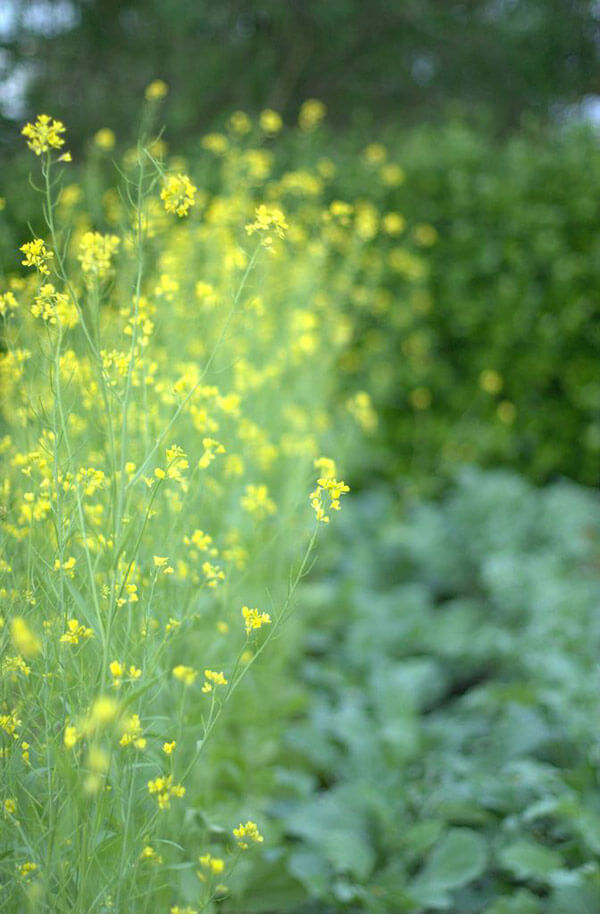
Mustard is a cool-season vegetable. That means it will naturally offset producing flowers when summertime'southward long, warm days arrive. If yous spot flower stalks, you can taste a leaf and see what you think. Yous may detect the season likewise strong and the texture tough. When plants start to flower, it'southward time to pull and compost the crop.
Green worms are eating the edges of my mustard greens. Can I spray annihilation that will impale the worms without hurting my family or pets?
Cabbageworm likes to consume mustard greens. If you've noticed a white moth fluttering amongst the greens, that's the source of your worms. Spray mustard greens with Bacillus thuringiensis (Bt) to command the worms. Bt doesn't touch on humans or wildlife; yous can harvest leaves immediately after spraying. Bt targets worms, which dice after ingesting it. After you spray Bt, worms may take a few bites from the leaves, but they'll shortly stop feeding and dice.
My mustard leaves accept squiggly, brownish to transparent lines in them that twist and turn all over the leaf. What is doing this?
Foliage miners are munching their way across your mustard greens. They're difficult to control because they actually eat within the leaves, instead of staying on the surface. The best control is to remove affected leaves or the parts of leaves that are affected. Destroy these leaves - don't compost them.
When should I harvest mustard greens? How practise I pick them?
You lot'll savor the best flavor when yous pick leaves that are young and tender. To harvest, you lot tin cut the unabridged constitute, which is what commercial growers do, or pick merely a few leaves. If you're not cut the whole found, selection individual leaves, starting from the outside of a plant. Outer leaves are larger and more mature. By picking these and assuasive inner leaves to remain, you lot're bodacious of a continued harvest over time. Toss wilted or yellow leaves on the compost pile.
I picked mustard greens last week and the patch still looks sparse. Is at that place anything I can do to jump-kickoff growth?
Requite your plants a boost by applying fish emulsion or a conventional liquid fertilizer such as 20-20-20 at the charge per unit recommended on the label. Applying i of these fast-acting liquid fertilizers after picking will assistance plants button out a few new leaves.
Source: https://bonnieplants.com/blogs/how-to-grow/growing-mustard-greens/
0 Response to "Is Mustard Cut and Come Again"
Enviar um comentário