What Are Some Good Colors for Patterns in Art
The 4 chief artists who used nature-inspired color palettes
As designers, we can ever get inspired by the main artists and their relationship with colors.
Many artists in history were obsessed with colors in nature. When viewing their masterpieces, we could observe their intense passions, unconcealable emotions, and their staunch belief in the power of colors.
As a product designer, I also constantly recall about what natural colour patterns tin exist used to amend connect with users. To become inspired, I want to take a whirlwind journeying through modern art history, drill insights into what colors meant to some of the nigh artistic geniuses, and discuss what can be leveraged to our design practices. 😉
Claude Monet: the harmonious, analogous colors
Claude Monet is among ane of the most well-known Impressionism artists. Around the 1860s, he and a group of young artists decided to paint what they saw, thought, and felt in a uncomplicated and intuitive fashion.
It was a huge break away from their Realist predecessors. Claude Monet and his peer artists were much more than interested in painting mural and contemporary life, rather than depicting historical and mythological scenes.
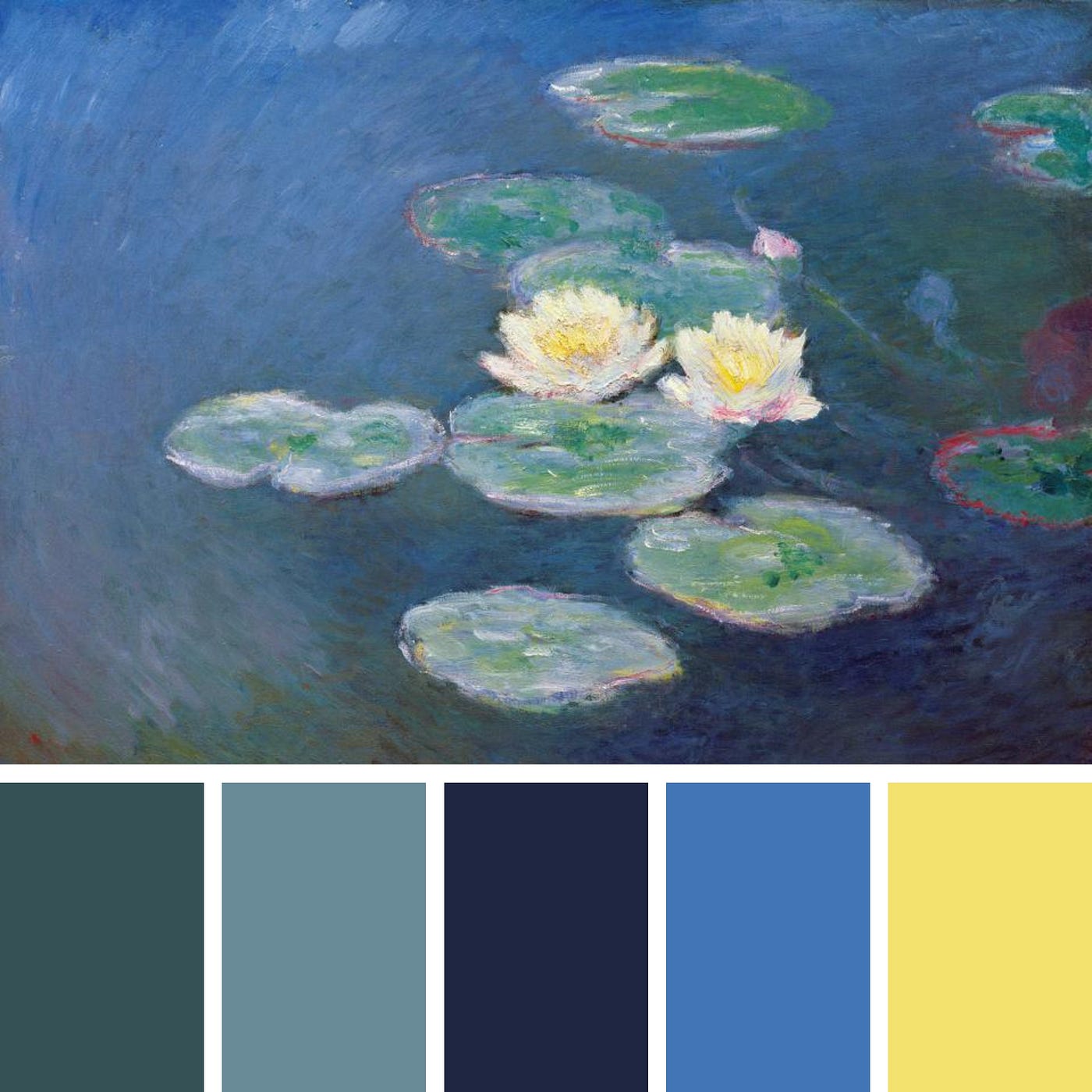
If nosotros accept a close look at Monet'southward paintings, we can notice his focus on picturing nature and capturing the fleeting effects of natural light. The color palettes on his works were often soft and glowing, which convey a more than intimate feel to the viewers.
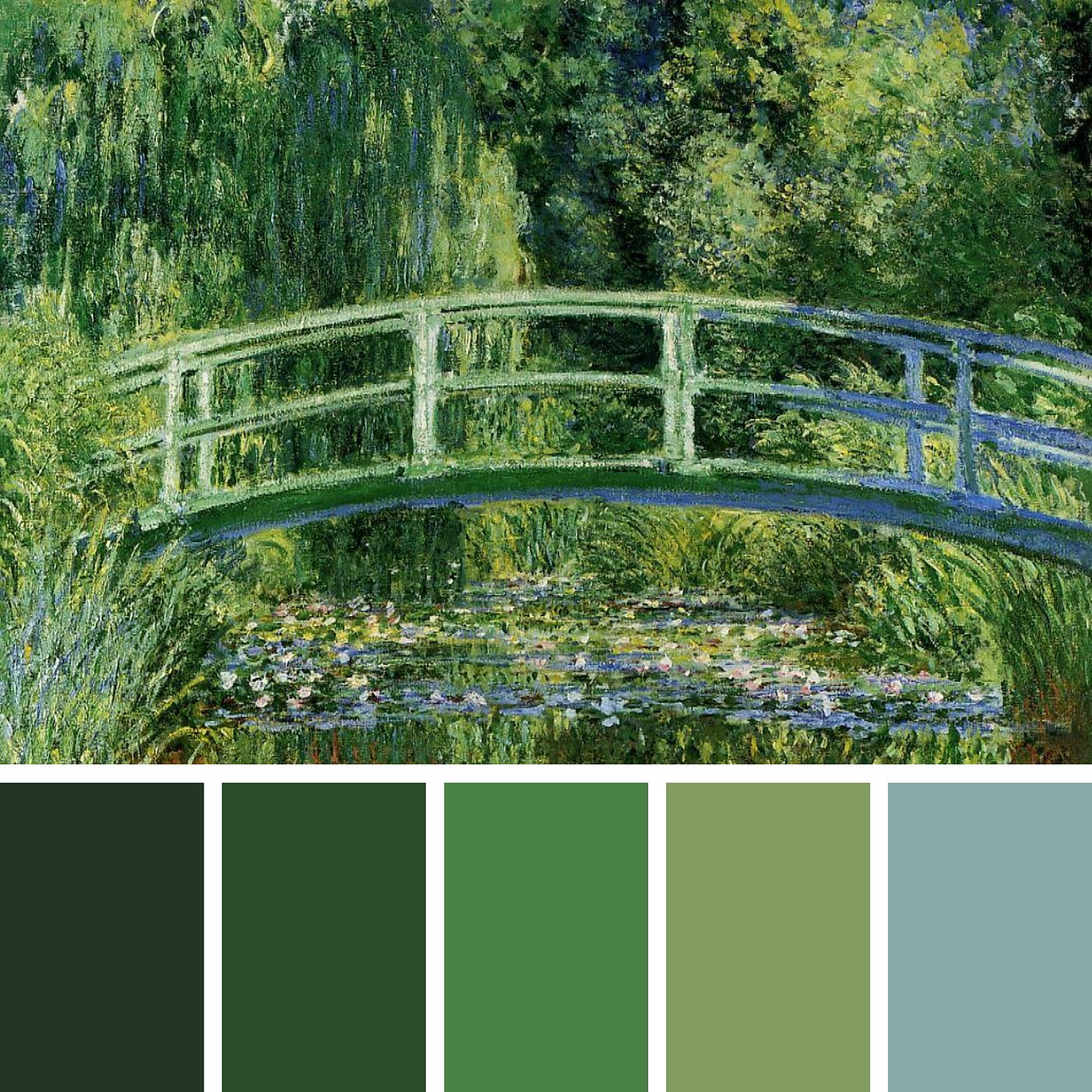
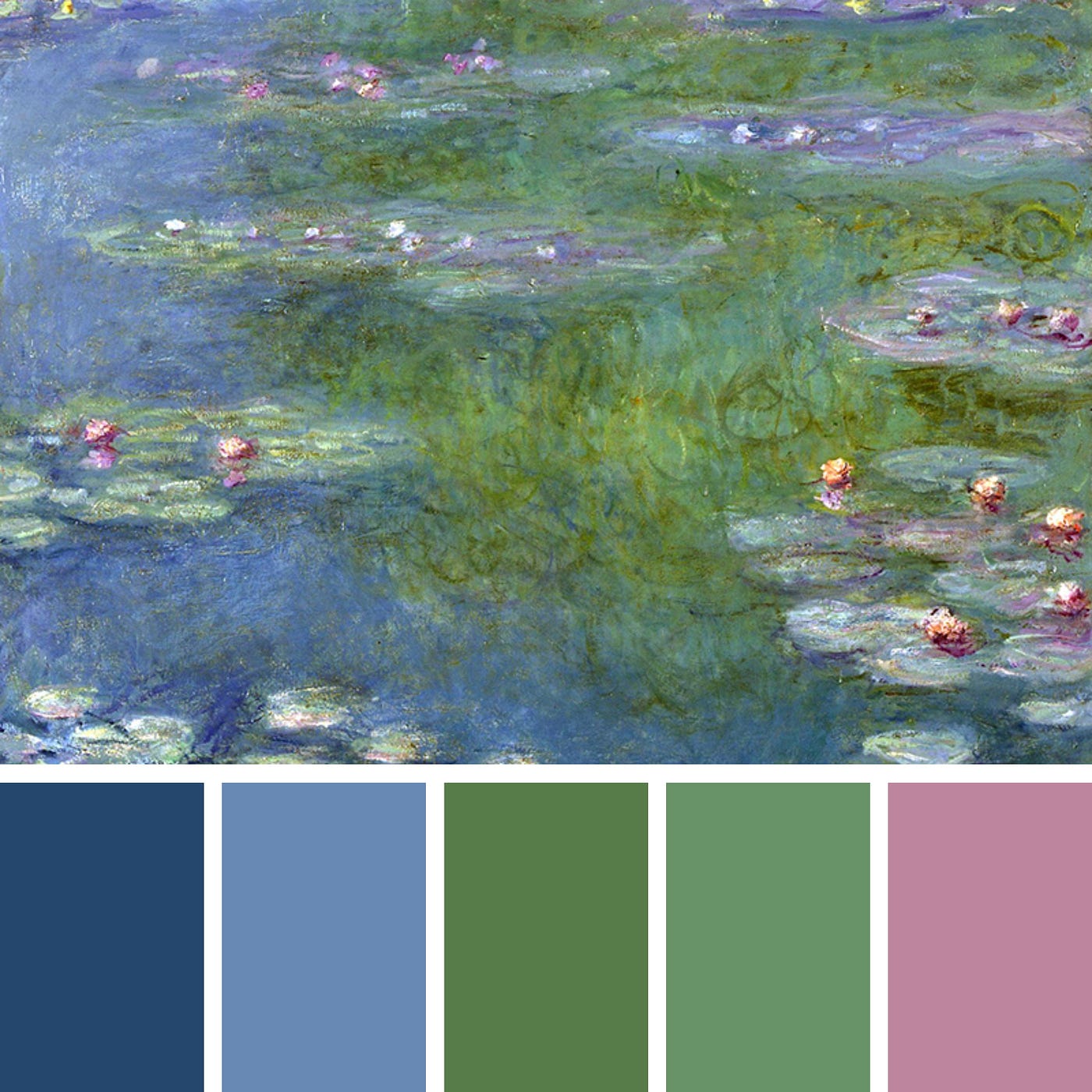
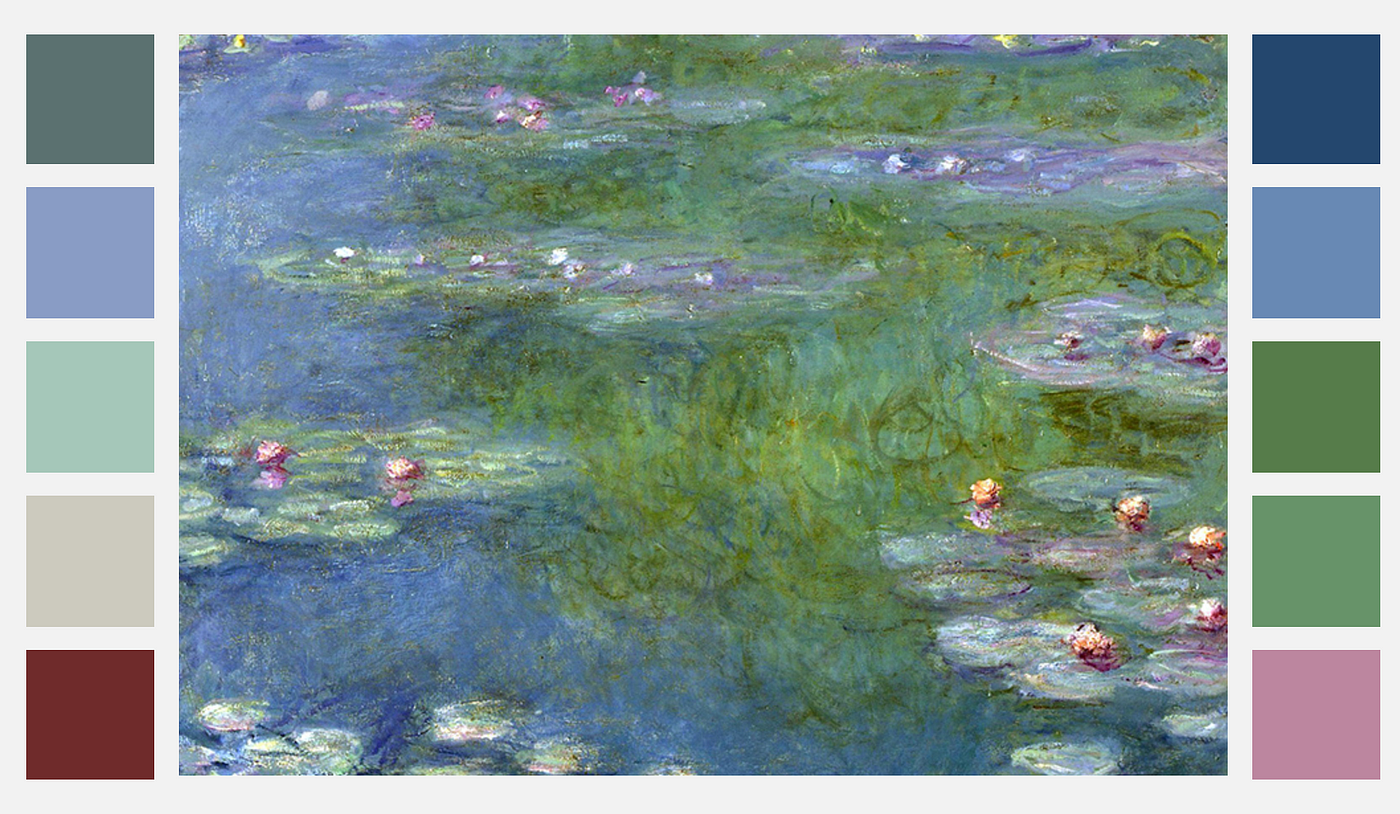
Meanwhile, he frequently used analogous colors to draw natural sceneries. The "Water Lillies" series is one of the stunning examples. In the post-obit "Water Lillies" painting created in 1908, we tin can sense the beauty of nature through the softly fluid blues and greens, with cream and a flake of pink. The shine transitions betwixt analogous colors create a sense of gentleness and calm.
💡 Designer takeaway
Analogous color schemes are often found in nature and are harmonious and pleasing to the centre. Claude Monet'due south works can be a great place to discover inspiration from if nosotros want to convey a calm, gentle feel in the interface nosotros're designing.


Van Gogh: an obsession with complementary colors
As one of the pioneers of Post-Impressionism, Vincent Van Gogh was well-known for his bold utilise of colors. In almost all of his paintings, he used "yellow" and "blueish" with different tints, tones, and shades, since these two colors appear the most often in nature, and they brought him childhood and Dutch memories.
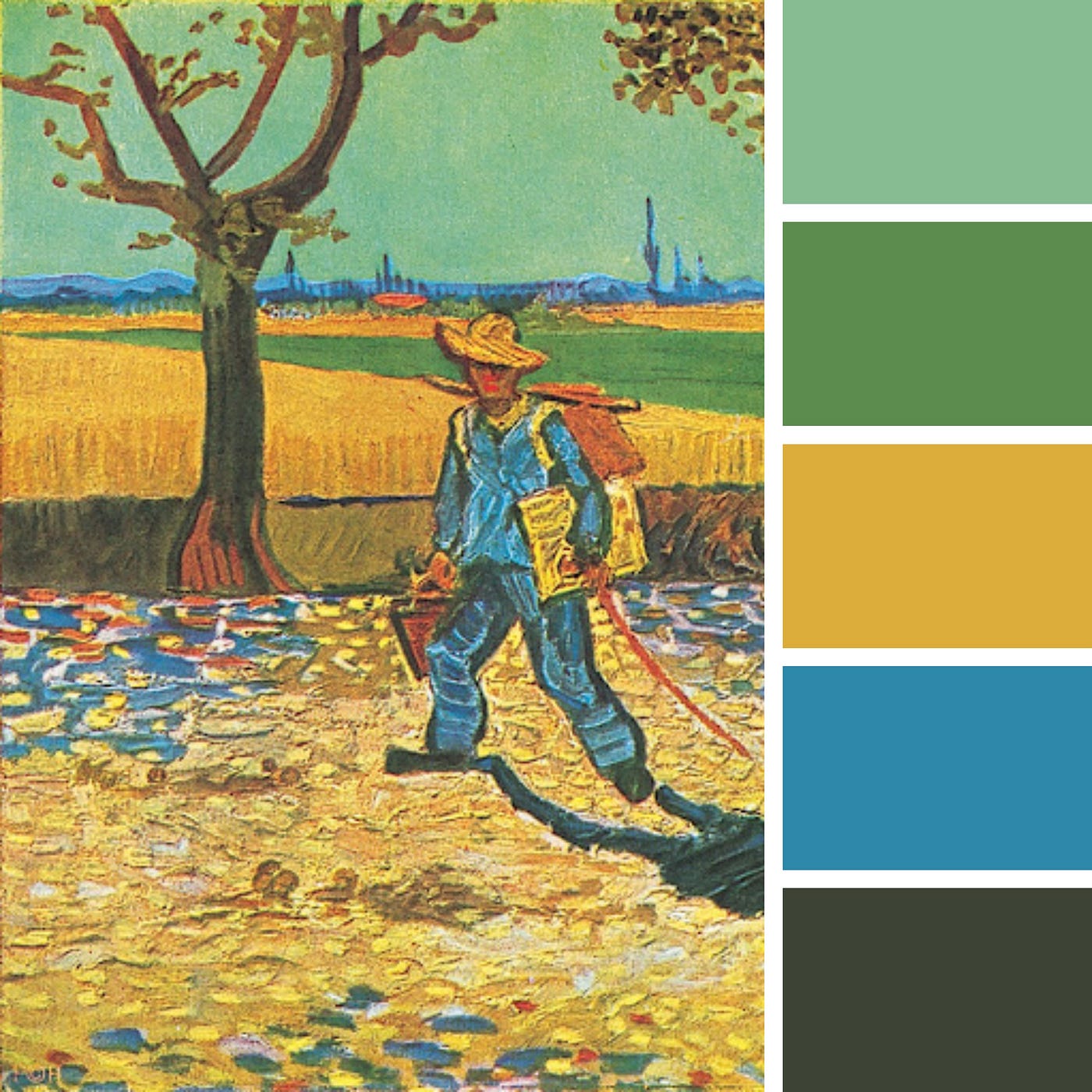
Yellow and blue — a classic pair of complementary colors, gave Van Gogh profound emotions to the art:
"The dome of the sky has an extraordinary blue; the color of the sunlight is that of pale sulfur, sweet and enchanting, as the combination between the heavenly blue and the yellowish in Vermeer or Delft's paintings. I fail to resume and so beautiful."
— Writes by Van Gogh to his brother Theo.
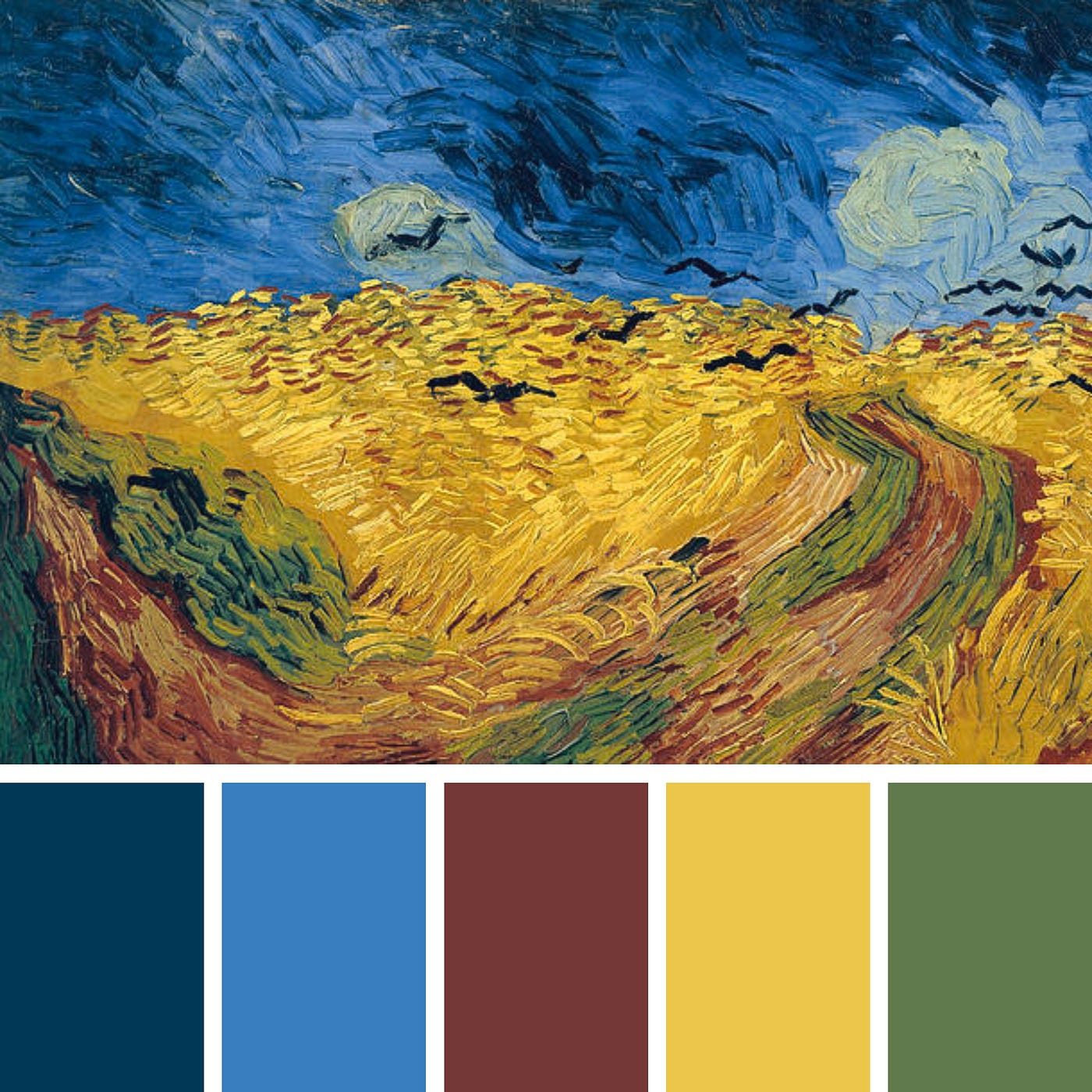
If we further analyze Van Gogh'southward pieces, we can see how he used the power of complementary colors and the color wheel to heighten the visual effect of simultaneous dissimilarity.
I'll take the following painting "Café Terrace on the Place du Forum, Arles" (1888) as an example. Unlike Monet who always reaches a harmonious peacefulness in every angle of the painting, Van Gogh wanted the viewers to move their eyes around the painting, not just by the composition, but by the use of complementary colors.
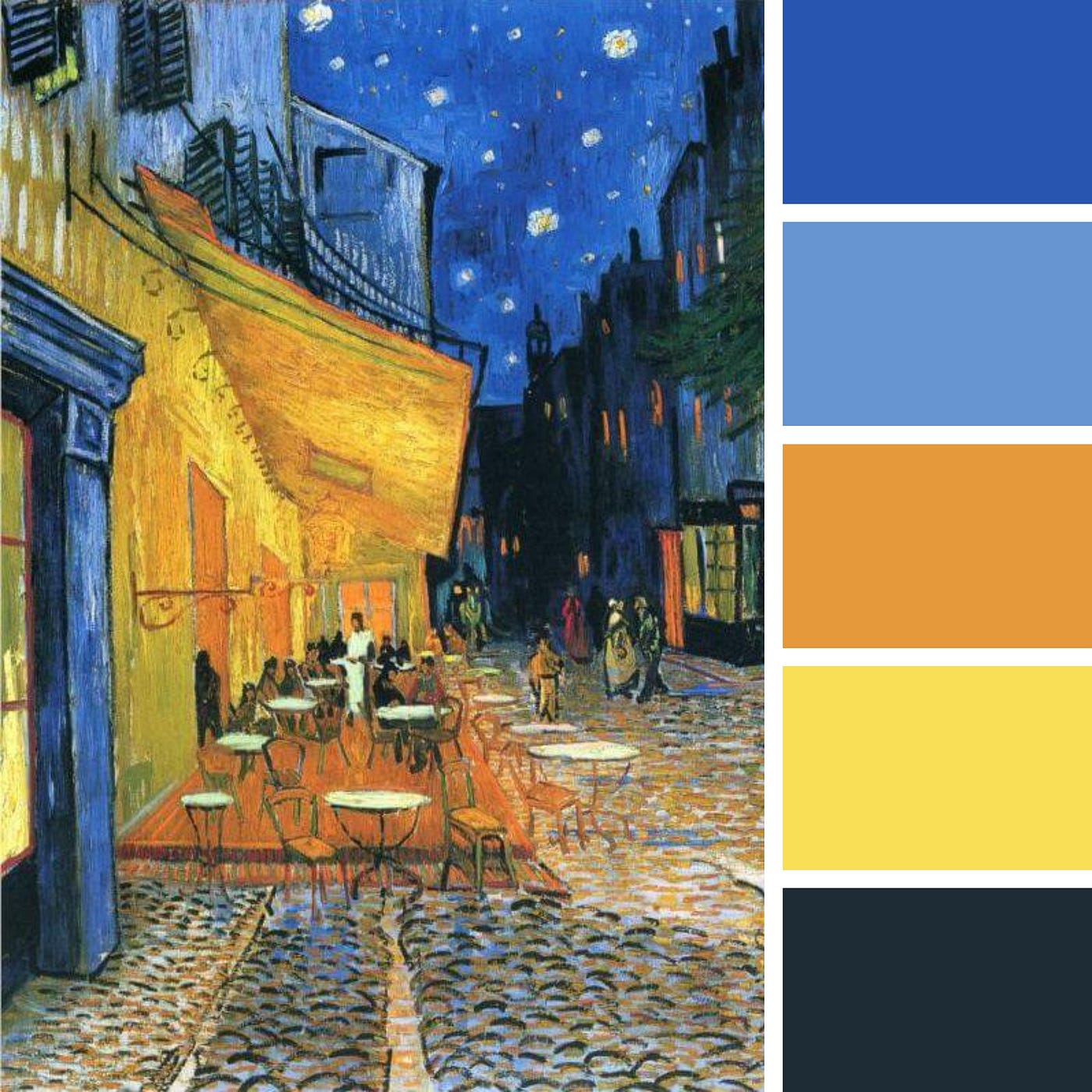
On the far right side of the painting, we can see a stiff saturated orange sitting correct adjacent to a pure french ultramarine, which causes a shimmering effect and gives the evening window light a glow. Meanwhile, Van Gogh used a combination of warm and cool colors, which gives more than "visual depth" to the painting — the absurd color recedes into the groundwork, while the warm colors come up forwards.
💡 Designer takeaway
Using complementary color pairings is a surefire style to create delightful experiences and evoke people'southward emotions. We need to be aware of what types of emotions nosotros desire to arm-twist from the users earlier deciding the pair of principal colors we want to use. In addition, using a combination of warm and cool colors tin help add "visual depth" to the interface nosotros design.

Helen Frankenthaler: the undulations of color
Helen Frankenthaler was 1 of the pioneers in the new generation of abstruse painting in 1970s, which is now known as the "Color Field" movement. Frankenthaler explored different color palettes all the time, and her use of color kept evolved throughout her career.
Only similar many other great artists in history, Frankenthaler painted nature using nature-inspired colors. In her words, she often took inspiration "from the unique landscapes of Provincetown, Massachusetts". Still, she was not just capturing the contours of the landscapes, she focused more on her emotional reactions to the scenes, and pour them onto the canvases. And in fact, information technology is her sense of natural spontaneity that makes her works so compelling.
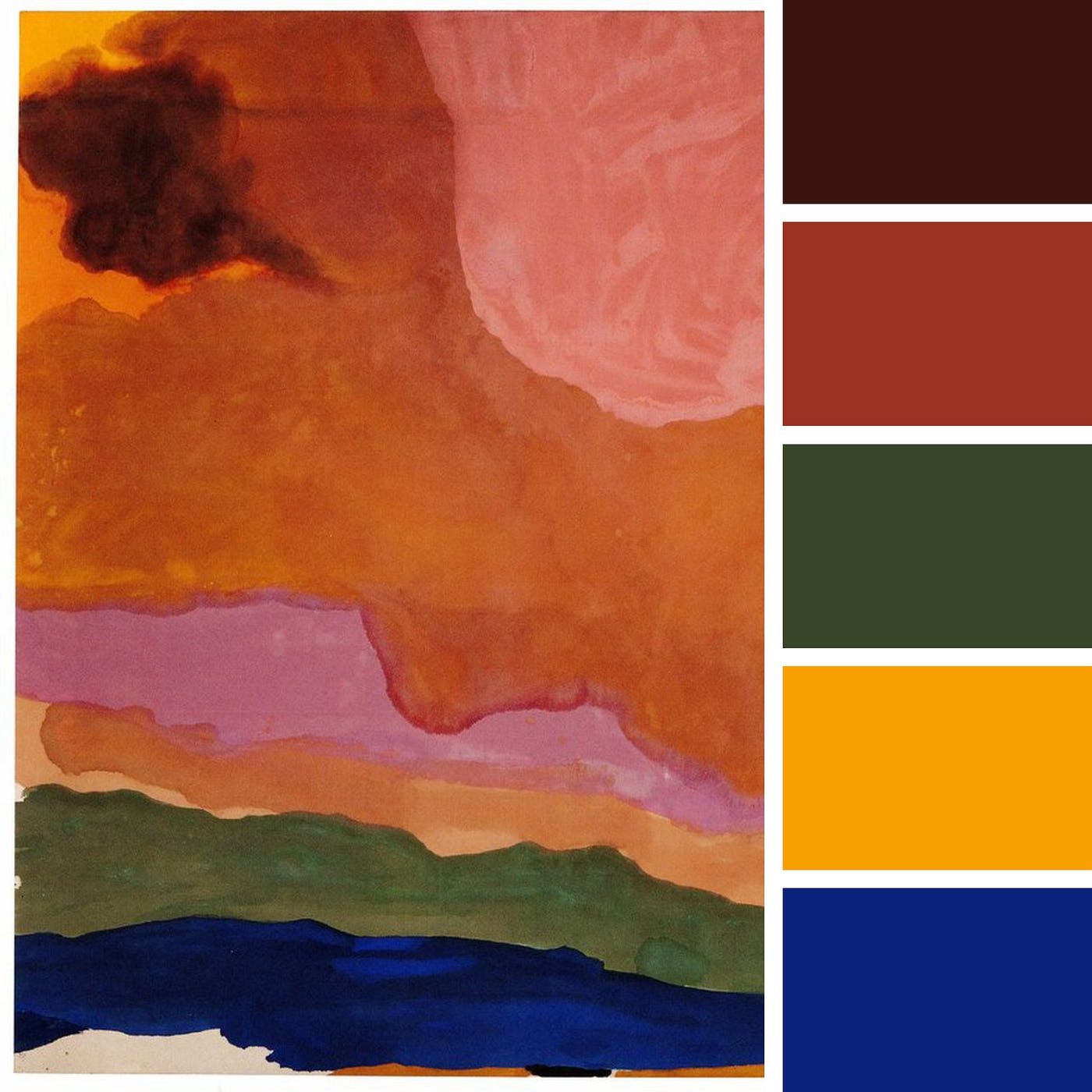
Permit's take one of her most famous works — "The Bay" (1963) for example. The championship of this painting already reveals the theme. However, as viewers, we may keep wondering: What kind of bay area does it refer to? Does the swelling amorphous blue mass stand for something beyond itself? Does the moss light-green betoken something far abroad?
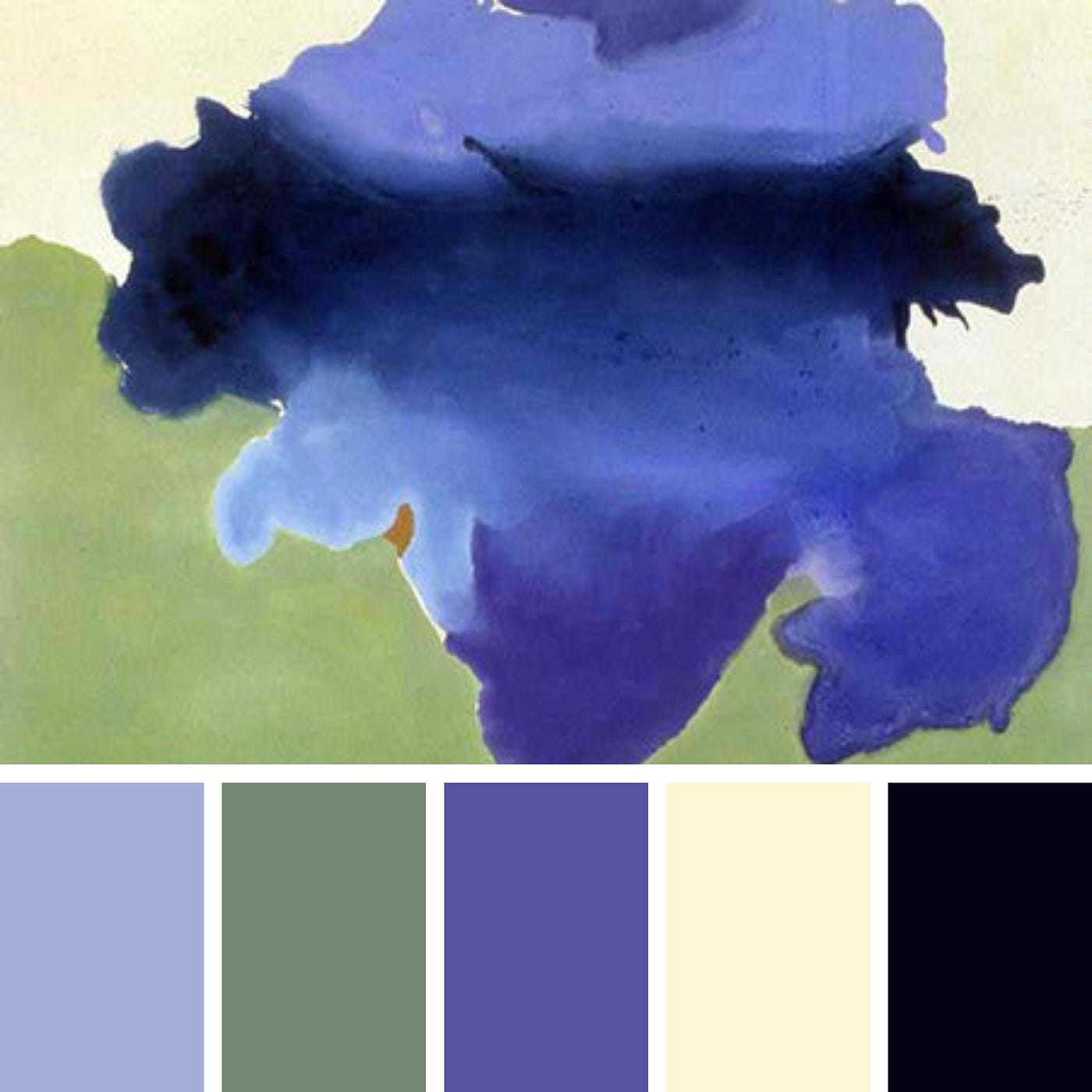
By using modulated hues to capture abstract forms, Frankenthaler not only captured nature with innovative, abstract forms, she also created a large space for imagination.
💡 Designer takeaway
The natural, modulated hues used by Helen Frankenthaler — some media besides utilise the term "soak stain" technique, creates ethereal notwithstanding saturated compositions that are appealing, soft, and bold all at one time. Even half of a decade has passed, the color palettes used past Frankenthaler are still modern and refreshing. If we ever desire to utilize wave, abstract patterns to spark users' emotions and imaginations, Frankenthaler's works are a "color library" we can e'er get inspiration from.


Georgia O'Keeffe: play with a broad range of effulgence in colors
Georgia O'Keeffe is probably the most famous for her paintings focused on enlarged flowers. The strong, vibrant tertiary color schemes she used in the paintings created a sense of energy and vitality.
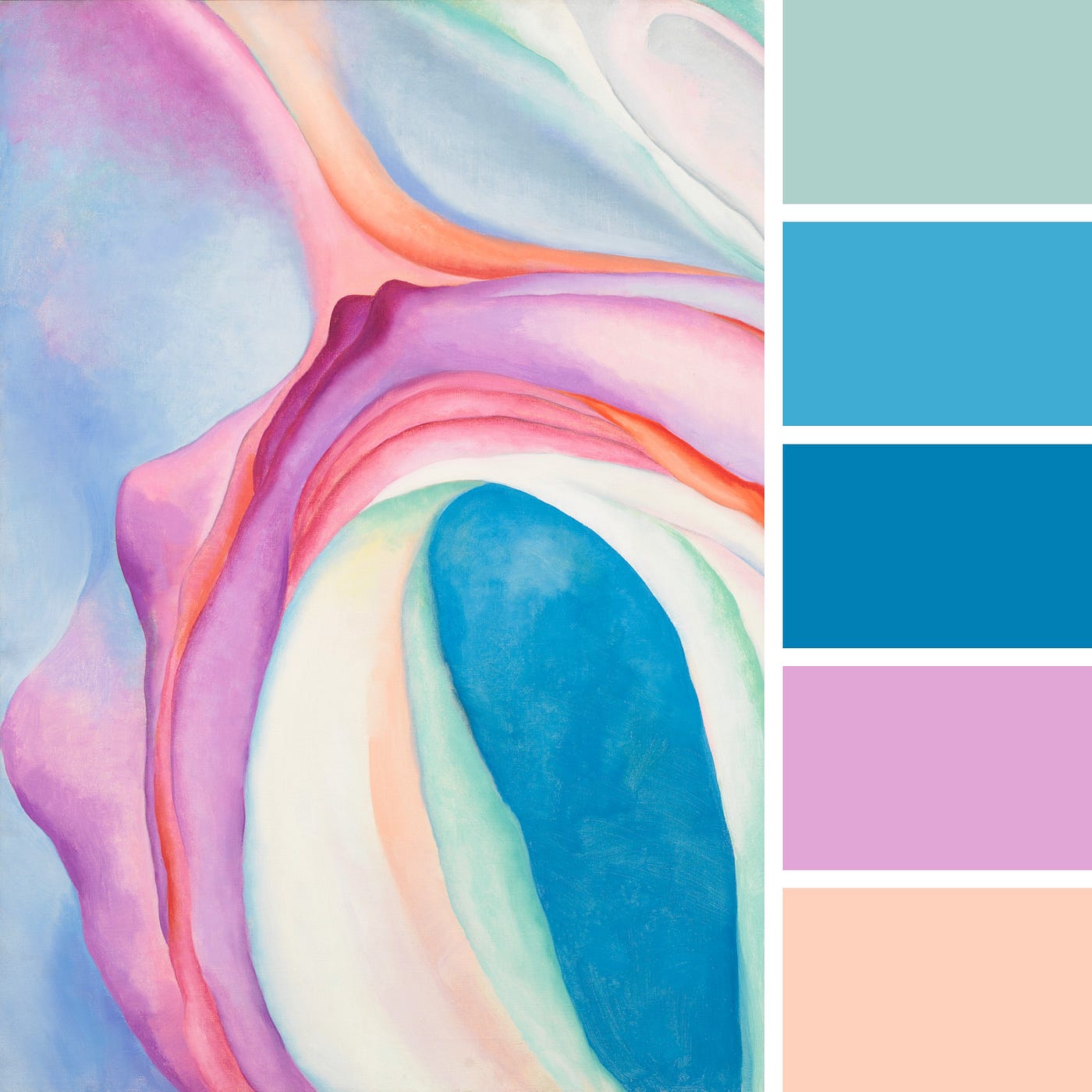
Withal, I am also interested in O'keeffe's landscape paintings. In these paintings, we could see how she was largely influenced by her teacher Arthur Wesley Dow, who was an advocate for Japanese art — focusing on iii principles of composition: line, color, and 濃淡 (a Japanese design concept involving the play and placement of low-cal and dark elements).
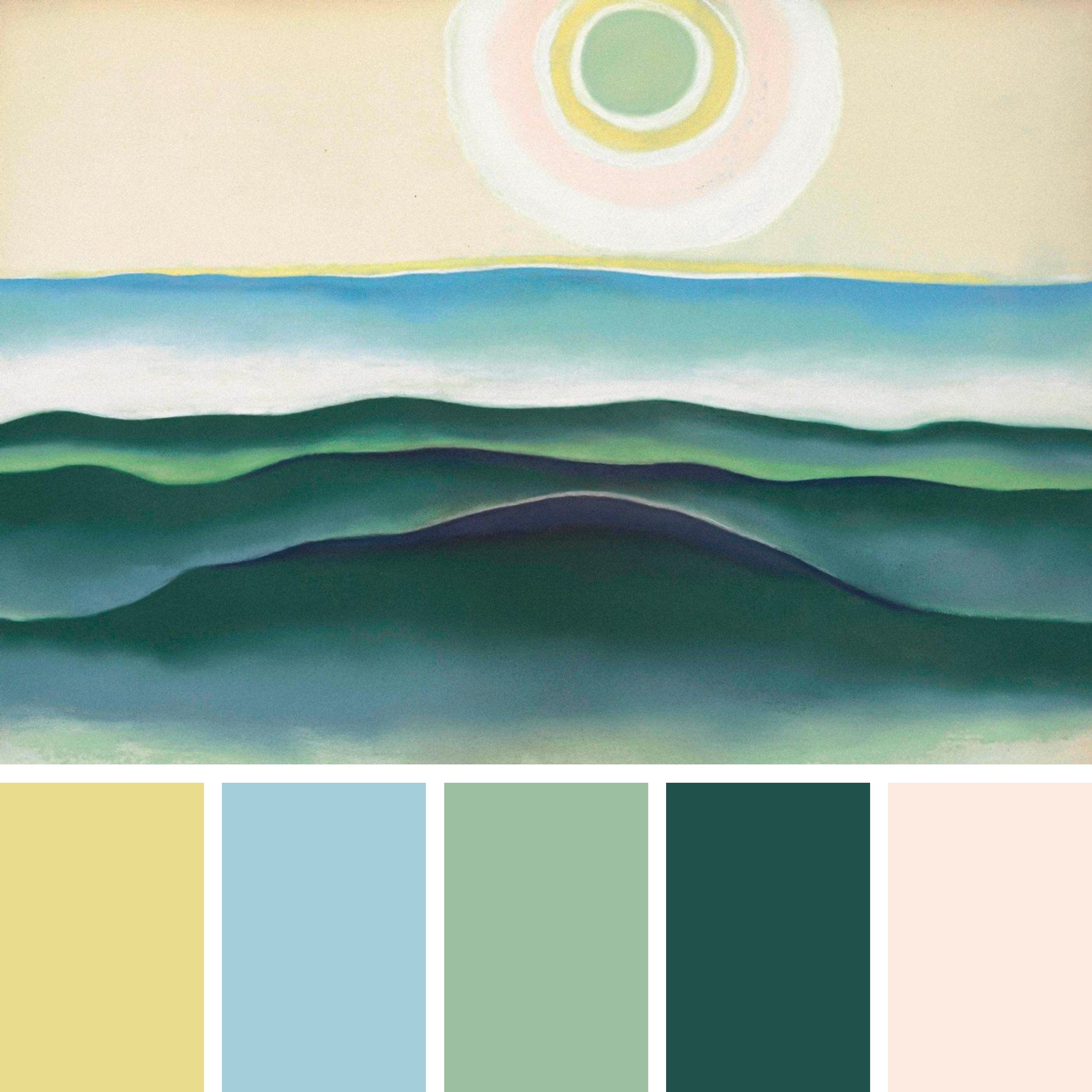
In the painting "Lake George (formerly Reflection Seascape)" (1922), we could see how O'keefee used cyan blue equally a baseline and played with a wide range of brightness in it. Also, she mastered the utilize of "night color" and "bright color", which raced beyond the middle of the sheet.

Aforementioned in the painting "Lake George Reflection" (1921–1922). Without the black and white added in the middle of the canvas, this painting would have the same glorious intensity and counterbalance.
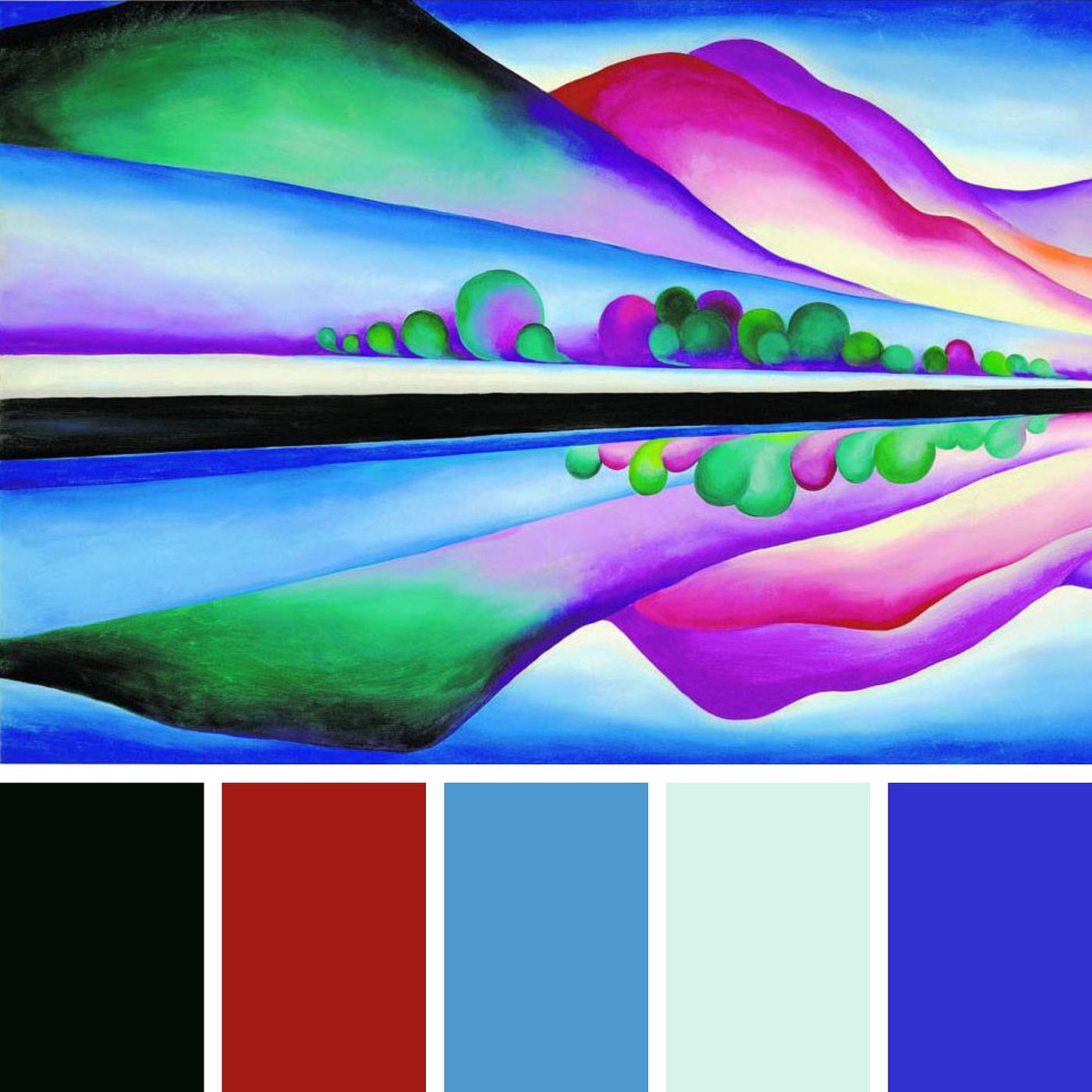
It worth mentioning that O'Keefe was very artistic and assuming in depicting the same theme (Lake George) using totally dissimilar approaches. The shape of the subject area was non that different in these 2 paintings, even so, because O'Keefe applied very unlike color palettes, the paintings elicited different kinds of emotions from us: the first painting conveyed a feeling of calmness; the second painting used shades of red and dark-green to express power, while the coordinating colors (red against royal, bluish with green) reduced the tension.
💡 Designer takeaway
Colors aid tell a story, and even when we're designing the same theme/topic, we could use various colour palettes to evoke different emotions from the viewers. Also, when designing visualizations, rainbow colors may not exist a good option since human being eyes aren't good at detecting the edges of different colour hues next, and that'south when we could play with the brightness within unmarried colour ranges. Looking at her landscape paintings, can y'all also come across the mount shapes are similar to the expanse graphs we use a lot in data visualization?

Useful resources
As natural color palettes are widely practical in design, information technology is always beneficial to report main artists who used nature-inspired color palettes, so that we can cultivate aesthetic sense and be more creative in using colors. Hither are some useful links to help yous selection color palettes from art masterpieces:
- ColorLisa: a great resource to bank check and learn color palette masterpieces from the globe's greatest artists (rank in alphabetic gild)
- ColorSnap: a useful tool for designers (especially interior designers) to pick colour palettes from either artworks or other kinds of photos.
- Coolers: a website that allows you lot to upload whatever flick and so generate a colour palette automatically/manually. It's skillful that you tin consign the color palette past creating collages.
- Canva: quick colour palette generator. You can easily upload any picture, and it will use the hues in the photo to create a palette containing four colors.
- iColorpalette: another tool that allows you to upload whatsoever picture and generate a colour palette. You lot can manually select colors from the image and download the colour palette in dissimilar formats.
- Brandfolder: quick color palette generator. You can hands upload any picture to generate a color palette. It also allows y'all to easily copy the HEX code for colors.
Source: https://uxplanet.org/the-4-master-artists-who-used-nature-inspired-color-palettes-c10441c1c7d2
0 Response to "What Are Some Good Colors for Patterns in Art"
Enviar um comentário